
I do/teach/breathe science, science writing, and writing. Thanks for visiting.
Jamie Zvirzdin
  • Bio
  • Publications
  • Store
    • Private Writing Lesson
    • Buy a Coffee for Jamie!
  • Contact

Publications

Your browser does not support viewing this document. Click here to download the document.

Summaries of Peer-Reviewed Physics Papers and Proceedings

"Searching for EeV Photons with the Telescope Array Surface Detector and Neural Networks"

Picture
arXiv preprint 
​
https://doi.org/10.48550/arXiv.2512.01638​
December 1, 2025
​
Using 14 years of data from the Telescope Array in Utah, this study searched for ultrahigh-energy photons—extremely energetic particles of light that can reveal how cosmic rays are produced or point to new physics such as exotic dark matter. When particles from space hit Earth’s atmosphere, they create large cascades of secondary particles. Photon-driven cascades look subtly different from those made by ordinary cosmic-ray protons.

To tell them apart, a neural network was designed to recognize detailed timing and pattern clues in the detector signals, tuning it so it would work reliably on real data. After analyzing the full data set, there was no clear evidence for EeV photons, but we can now set the strongest limits yet in the Northern Hemisphere on how rare these photons must be. These results tighten the constraints on several theories about high-energy cosmic processes and possible new particles, even without making a direct detection.

"Study of Air Shower Reconstruction with Asymmetric Lateral Distribution Function for TAx4 Surface Detector"

Picture
Proceedings of the 39th International Cosmic Ray Conference (ICRC2025)
​https://doi.org/10.22323/1.501.0378
September 24, 2025

Using simulations for the expanded TA×4 detector array, this study showed that cosmic-ray air showers are not perfectly symmetric on the ground when they arrive at steep angles, because particles on one side of the shower travel through more atmosphere than those on the other. A simple correction accounts for this asymmetry and was built into the standard reconstruction method. Doing so improved the accuracy of shower core location and reduced energy uncertainty by a few percent for inclined events. This makes energy measurements in TA×4 more reliable, which is crucial for studying the highest-energy cosmic rays and their origins.

​Time-Resolved Leader Spectra of Downward Terrestrial Gamma-Ray Flashes Observed at the Telescope Array Surface Detector

Picture
Journal of Geophysical Research: Atmospheres
https://doi.org/10.1029/2025JD043812​
August 16, 2025

​Building on our first study, this paper presents time-resolved light spectra from two additional downward Terrestrial Gamma-ray Flashes (TGFs) linked to lightning leaders, captured using the Telescope Array and a synchronized high-speed spectroscopic camera system. One event closely matched earlier observations, but the second revealed a previously unobserved type of lightning flash: a very fast, high-current leader with an unusual electric-field signature and no strong initial breakdown pulses.

​In both cases, we again found a striking pattern—ionized gases appeared before and after the gamma-ray bursts, while only neutral gases emitted light at the exact moment of the TGF. The second event also showed ion emissions persisting much longer than expected, suggesting a different and more energetic leader process. Together, these observations strengthen the link between lightning leader physics and TGF production and point to multiple pathways by which thunderstorms can generate these intense gamma-ray bursts.

Picture

"Update on Full-Sky Searches for Large- and Medium-Scale Anisotropies in the Ultra-High-Energy Cosmic-Ray Flux Using the Pierre Auger Observatory and the Telescope Array"

Picture
7th International Symposium on Ultra High Energy Cosmic Rays (UHECR2024)
https://doi.org/10.22323/1.484.0009
​
April 29, 2025

Using the largest combined dataset to date from the Telescope Array in Utah and the Pierre Auger Observatory in Argentina, this study searched the entire sky for patterns in the arrival directions of ultrahigh-energy cosmic rays, which are otherwise remarkably evenly distributed ("isotropic"). By merging data from both experiments, this working group achieved full-sky coverage and carefully cross-calibrated their energy measurements to avoid false north–south effects.

​The analysis confirms that the only clear large-scale pattern is a dipole—an overall excess of cosmic rays coming from one broad direction—seen at energies above about 8 EeV, with no convincing evidence for more complex structures. On medium angular scales, the data continue to show a statistically strong correlation between the highest-energy cosmic rays and nearby starburst galaxies, supporting the idea that these intense star-forming systems may be important cosmic-ray sources. Future upgrades to both observatories are expected to sharpen these results and help pin down where the most energetic particles in the universe come from.

"First Time-Resolved Leader Spectra Associated with a Downward Terrestrial Gamma-Ray Flash Detected at the Telescope Array Surface Detector"

Picture
Journal of Geophysical Research: Atmospheres
https://doi.org/10.1029/2024JD041720
​December 10, 2024

​For this peer-reviewed scientific study, I helped photograph and fix equipment for this lightning project in 2018 with Dr. Abbasi and Dr. Belz. I also assisted with the grant proposal, reviewed the article, and sent edits and suggestions to the lead author, Dr. Ny Kieu, prior to publication.

Our study captured the first detailed light spectra—patterns of light split into different colors—emitted by a lightning leader (the initial stage of a lightning bolt) that is linked to a downward Terrestrial Gamma-ray Flash (TGF). TGFs are brief, extremely high-energy bursts of gamma rays produced during thunderstorms. Thousands of these bursts happen worldwide every day, but we need specialized equipment to detect them, including a high-speed spectroscopic camera, a network of 11 lightning mapping stations, an interferometer, a fast antenna, and well as our 507 Telescope Array Surface Detectors in the Utah desert, which are normally used to capture the remnants of cosmic-ray events but also picked up evidence of these gamma rays from lightning.

Using this high-speed camera system, we observed that gases such as nitrogen and oxygen emitted light at specific wavelengths (colors) before, during, and after the TGF. These findings reveal new details about how lightning and TGFs are connected.

According to their website, JGR Atmospheres "publishes original research articles that advance and improve the understanding of atmospheric properties and processes, including the interaction of the atmosphere with other components of the Earth system, as well as their roles in climate variability and change."

​Observation of Declination Dependence in the Cosmic Ray Energy Spectrum

Picture
arXiv preprint
https://doi.org/10.48550/arXiv.2406.08612
June 12, 2024

​Using data from the two largest cosmic-ray observatories—the Telescope Array in Utah and the Pierre Auger Observatory in Argentina—this study reports strong evidence that the energy spectrum of ultrahigh-energy cosmic rays differs between the northern and southern skies. After carefully cross-checking detector methods in the region of sky seen by both experiments, the researchers showed that the two observatories agree there once known anisotropy regions are removed.

​When the full sky is considered, however, a statistically significant difference emerges: the Northern Hemisphere shows a higher flux and a higher-energy cutoff, driven in part by known excess regions such as the Telescope Array Hotspot and the Perseus–Pisces supercluster. Although the result reaches high statistical significance, its interpretation remains under debate because it challenges long-standing assumptions about cosmic-ray uniformity and raises difficult questions about source distribution, magnetic deflection, and hemispheric structure in the nearby universe.

Books, Essays, and Other Work by Jamie Zvirzdin

Picture
Picture

"The City of Wisdom"

Aeon Magazine
November 1, 2024

Personal science essay on bridging physics and storytelling. It recounts my unconventional journey from literature to particle physics, and it shows the connections between the Two Cultures of physics and literary arts. It also details how the scientific method follows the structure of a short story using Victor Hess and the discovery of cosmic rays.

https://aeon.co/essays/to-understand-physics-we-need-to-tell-and-hear-stories​

Cover illustration by Ivvy Chen.
Picture
Picture

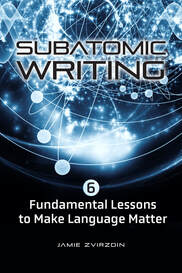
Subatomic Writing: Six Fundamental Lessons
to Make Language Matter

Johns Hopkins University Press
​
Publication date: February 21, 2023

A useful science-writing textbook disguised as a humorous thought experiment involving a demon and a cat. It was based on the Subatomic Writing course I created and taught at Johns Hopkins for five years, from 2019 to 2023. Amazon page here. 

The six lessons are
  1. Word Level: Good Vibrations,
  2. Phrase Level: Nested, 
  3. Clause Level: Visual Syntax,
  4. Sentence Level: Mind's Breath,
  5. Super-Sentence Level: Repetition, Variation, and
  6. Paragraph Level: Dot-to-Dot Game.

See www.subatomicwriting.com for teaser trailers, links to all online bookstores, and positive reviews from NASA, MIT, NPR, Grammar Girl, Mary Roach, and more. Subatomic Writing (SW) has now been presented and discussed in multiple workshops, readings, conferences, libraries, and podcasts.

​The guiding metaphor of SW is this: that particles of language are like particles of matter, and smashing them together can be extremely fun.
Picture
Picture
Picture

Monthly Newspaper Column: Citizen Science

It has been my honor to support local journalism by writing for The Freeman's Journal (newspaper), Hometown Oneonta (newspaper), and ​AllOtsego.com (online version) for central/upstate New York.

Some of my favorite articles:
 
2023 Series: Pseudoscience Vs. Science 


1. "Introducing Citizen Science: Finding Intellectual Security," 1/25/23.
www.allotsego.com/citizen-science-introduction-to-citizen-science-finding-intellectual-security/ (p. 8 of 1/26/23 newspapers) 

4. "AI Renaissance: A Chance to Reduce Cheating and Revitalize the School Experience," 04/28/23. https://www.allotsego.com/citizen-science-ai-renaissance-a-chance-to-reduce-cheating-revitalize-the-school-experience/

8. "Science Is a Word Game," 09/12/23. 
https://www.allotsego.com/citizen-science-science-is-a-word-game/

10. "Superstitious By Design: How We Negotiate Chaos, Uncertainty," 10/26/23. https://www.allotsego.com/citizen-science-superstitious-by-design-how-we-negotiate-chaos-uncertainty/

2024 Series: Energy Demystified

13. "A Year of Studying Energy," 01/31/2024. 
https://www.allotsego.com/citizen-science-energy-demystified-a-year-of-studying-energy/

14. "Calculating the Metaphysical and Physical Value of Work," 
03/7/2024. https://www.allotsego.com/citizen-science-calculating-the-metaphysical-and-physical-value-of-work/

19. "Understanding Sound Energy," 8/1/2024. 
https://www.allotsego.com/citizen-science-energy-demystified-understanding-sound-energy/

23. "Assessing Real and Perceived Risks of Nuclear Energy," 
12/5/2024. https://www.allotsego.com/citizen-science-energy-demystified-assessing-real-perceived-risks-of-nuclear-energy/

24. "Honoring Light from Stonehenge to Science," 12/27/2024. www.allotsego.com/citizen-science-energy-demystified-honing-light-from-stonehenge-to-science/

2025 Series: Physics Mysteries

25. "New Physics Mysteries Series: Developing Nancy Drew Grit," 2/06/2025. https://www.allotsego.com/citizen-science-new-physics-mystery-series-developing-nancy-drew-grit/

 26. "Solving the Mystery of the Vanishing Love for Science," 3/06/25. ​https://www.allotsego.com/citizen-science-solving-the-mystery-of-the-vanishing-love-for-science/

29. "Discovering the Secret of the Rocky Road of Life," 9/11/25. https://www.allotsego.com/citizen-science-discovering-the-secret-of-the-rocky-road-of-life/www.allotsego.com/citizen-science-discovering-the-secret-of-the-rocky-road-of-life/

30. "Solving the Clue of the GZK Cutoff," 12/4/25. ​https://www.allotsego.com/citizen-science-solving-the-clue-of-the-gzk-cutoff/www.allotsego.com/citizen-science-solving-the-clue-of-the-gzk-cutoff/
Picture

"Dust to Dust: The Cosmic Perspective"

Microlit Almanac

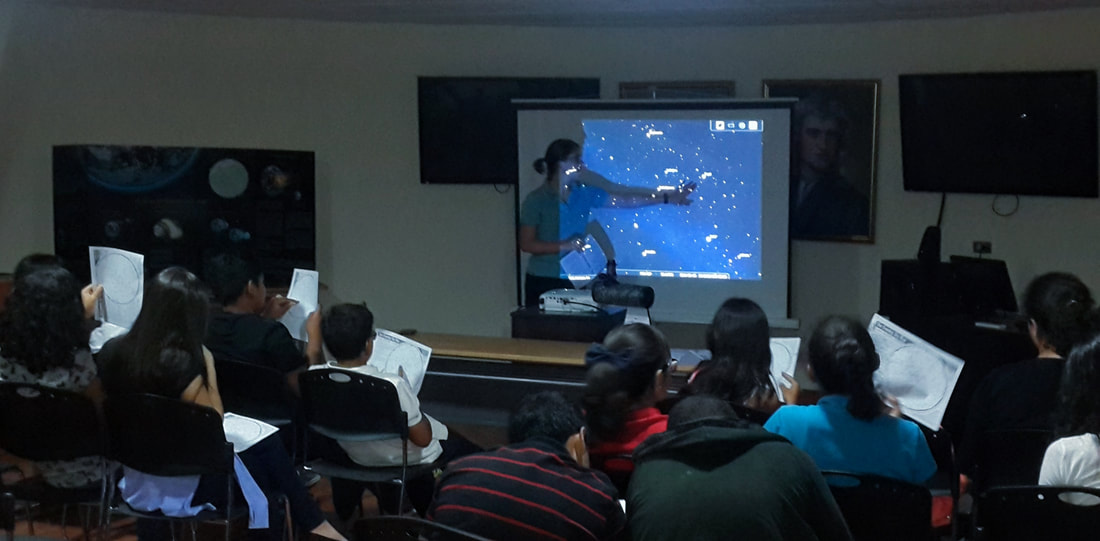
A science sonnet + creation story—a poem + prose flash-nonfiction piece about carefully offering existential comfort while teaching astronomy in Nicaragua. 
​www.birchbarkediting.com/microlit-almanac/dust-to-dust-zvirzdin

Publication date: February 16, 2023
​
Picture

The Complicated Truth of Climate Change
in the Marshall Islands

​The New Republic
January 1, 2021
​
Personal science essay about how living in the Marshall Islands eroded, shifted, and rebuilt my perceptions of both myself and coral atolls. Also discusses the need for nuanced, science-based climate change narratives.

https://newrepublic.com/article/160768/complicated-truth-climate-change-marshall-islands​

Free download of brochure mentioned in the essay:
University of Hawai'i Sea Grant, A Landowner's Guide to Coastal Protection
​
November 2012
a_landowners_guide_to_coastal_protection_nov_2012.pdf
File Size: 21345 kb
File Type: pdf
Download File

Picture

"6 Ways to Calculate a Universe in Flux"

Orion Magazine
Enumeration
September 26, 2019
 
Lyric essay in Autumn 2019 issue on unnatural borders. It describes how my son, diagnosed with ASD, handled our frequent moves in the Foreign Service with the help of a calculator.
​https://orionmagazine.org/article/6-ways-to-calculate-a-universe-in-flux/
Picture

"I Fell Under the Spell of NASA's Most Notorious Thief"

The Atlantic
Science Section
February 15, 2019

Science article about my curious relationship with a curious criminal. 

"Walking by Dogs on a Marshallese Morning"

Brevity Magazine
One-Minute Memoir 
​September 4, 2018

Flash-nonfiction piece about walking with women on Majuro Atoll in the Marshall Islands. Starts at minute 33.
Picture
Picture

"The Makeup of a Monster"

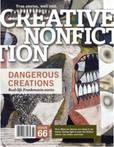
Creative Nonfiction Magazine Issue #66
Dangerous Creations: Real-Life Frankenstein Stories Issue
March 2018

Now available online! 
https://creativenonfiction.org/writing/the-makeup-of-a-monster/

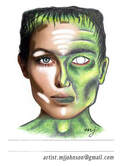
Nonfiction essay on the similarity of makeup techniques for both monsters and models, with a historical look at what Boris Karloff's Frankenstein makeup regimen cost him. Includes interviews with my sisters and my mother, all makeup artists.
Picture

"On the Revolution of Revolutions: Nicaraguan Women After War"

CONSEQUENCE Magazine 
Ten-Year Anniversary Issue
​February 2018

Nonfiction essay asking Nicaraguan women if, like the planets, their status and opportunities as women have come full circle even after a political revolution. Includes interviews with former Sandinista commander Dora María Téllez and one of her hostages.
Picture
Picture

"'Shuddering Before the Beautiful':
​Trains of Thought Across the Mormon Cosmos"

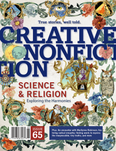
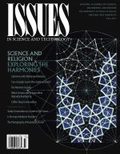
Creative Nonfiction Magazine (Issue #65) and ​Issues in Science & Technology Magazine
Special Collaborative Issue on Science & Religion (read online here)
October 2017
​

Nonfiction essay on the challenges and harmonies between science and religion. Winner of the $5,000 runner-up prize. Launch event of the two magazines was held on October 13, 2017 at the National Academies of Science, Engineering, and Medicine in Washington, D.C. Sponsored by the Think Write Publish Foundation.
Picture

"Observations of a Science Editor: If Romantic Scientists Pilfered Fiction's Toolbox, So Can You"

The Kenyon Review
Special Issue: ​"The Poetics of Science"
Fall 2016
Nonfiction essay on the intersection of science and literature, adapted from a lecture given at Bennington College, June 2015. Published September 6, 2016 by The Kenyon Review as the centerpiece of a multi-platform discussion of science writing as literary art. Responses to the essay from scientists, writers, and editors were published throughout September and October 2016.
​
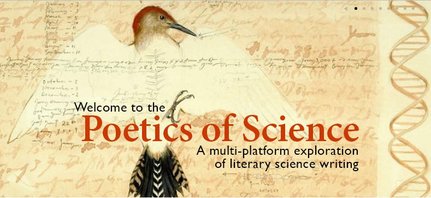
​Introduction, posted 8/30/16: Sergei Lobanov-Rostovsky: "Welcome to The Poetics of Science!"

Posted 9/6/16: Justin Wymer: “A Response to Jamie Zvirzdin’s ‘Observations of a Science Editor’”
Posted 9/8/16: Natalie Mesnard: “A Response to Jamie Zvirzdin’s ‘Observations of a Science Editor’”
Posted 9/13/16: Patrick D. Watson: “A Response to Jamie Zvirzdin’s ‘Observations of a Science Editor’”
Posted 9/14/16: Diane K. Martin: “A Response to Jamie Zvirzdin’s ‘Observations of a Science Editor’”
Posted 9/16/16: Jennifer Bowen Hicks: “A Response to Jamie Zvirzdin’s ‘Observations of a Science Editor’”
Posted 9/20/16: Leah Falk: “A Response to Jamie Zvirzdin’s ‘Observations of a Science Editor’”
Posted 9/22/16: Joseph Osmundson: “A Response to Jamie Zvirzdin’s ‘Observations of a Science Editor’”
Posted 9/26/16: L. Shapley Bassen: “A Response to Jamie Zvirzdin’s ‘Observations of a Science Editor’”
Posted 9/28/16: Helen Betya Rubinstein: “A Response to Jamie Zvirzdin’s ‘Observations of a Science Editor’”
Posted 9/30/16: Benjamin Kolp: “A Response to Jamie Zvirzdin’s ‘Observations of a Science Editor’”
Posted 10/4/16: Brian Doyle: “A Response to Jamie Zvirzdin’s ‘Observations of a Science Editor’”
Posted 10/6/16: Karen Luper: “A Response to Jamie Zvirzdin’s ‘Observations of a Science Editor’”
Posted 10/10/16: E. A. Farro: “A Response to Jamie Zvirzdin’s ‘Observations of a Science Editor’”

Picture

Fresh Courage Take: New Directions by Mormon Women

Nonfiction anthology project published July 2015 by Signature Books. Book is available on Amazon here. Nominated by the John Whitmer Historical Association for 2016 Best Anthology and a finalist for the 2015 Smith-Pettit Foundation Award for Outstanding Contribution to Mormon Letters in Creative Nonfiction.

Joanna Brooks, a Mormon feminist and the author of The Book of Mormon Girl, has written the foreword for this book.

More about this book here!
Fresh Courage Take

Picture

"Gaia Mission versus Star Trek: The Data Challenge"

Nonfiction science article published here on Gigaom's Science & Energy page. Published October 11, 2014. Summary: To gather precise data on more than a billion stars and other phenomena in our galaxy requires some intense data collection equipment and processing tools.
Picture

"On Inhaling Books"

Room Magazine
"Geek Girls" edition, Volume 37.3

Nonfiction article on the science and hobby of smelling books, published September 2014 in Room, Canada's oldest literary journal by and about women. Copies can be purchased for USD $12.00 here.
Picture

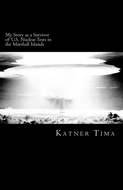
My Story as a Survivor of U.S. Nuclear Tests in the Marshall Islands

By Katner Tima, edited by Jamie Zvirzdin. A short memoir detailing Tima's experience surviving the fallout from the Castle Bravo nuclear test, which was conducted by the United States government in the Marshall Islands on March 1, 1954. Kindle version free for Amazon Prime members.

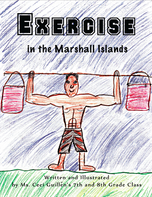
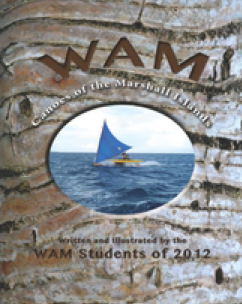
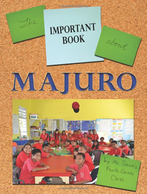
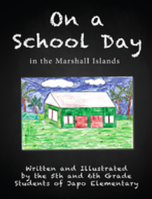
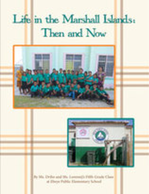
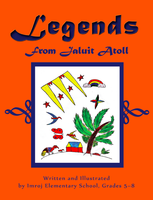
The Unbound Bookmaker Project: Marshallese-English Children's Books

Click here for more information on the creation and completion of this project.
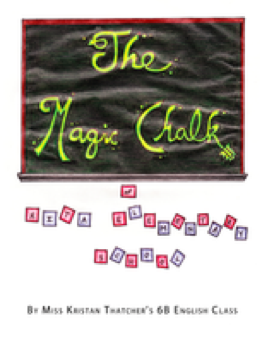
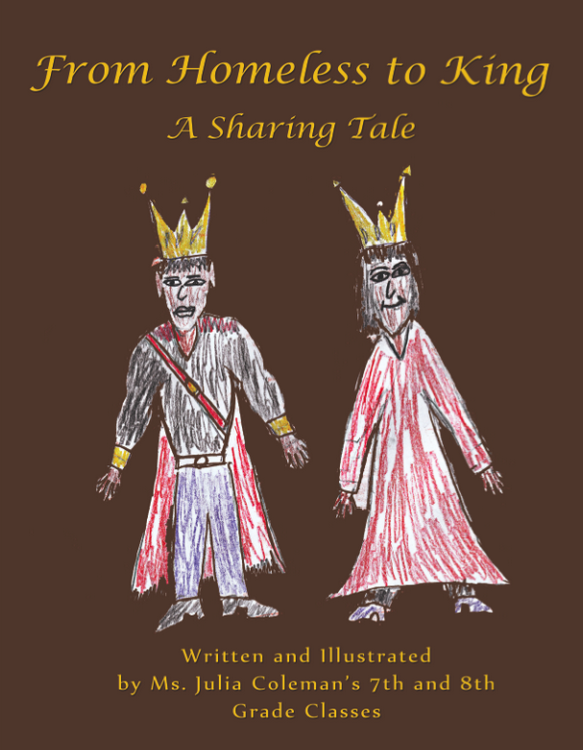
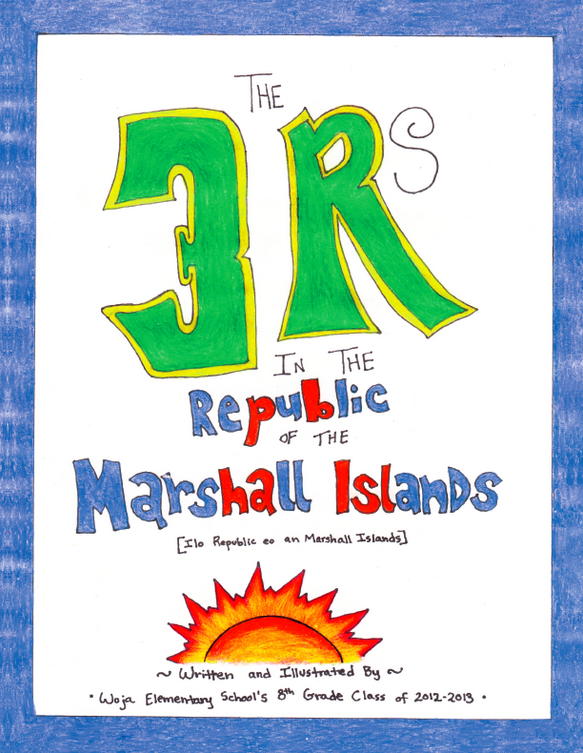
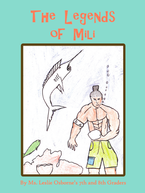
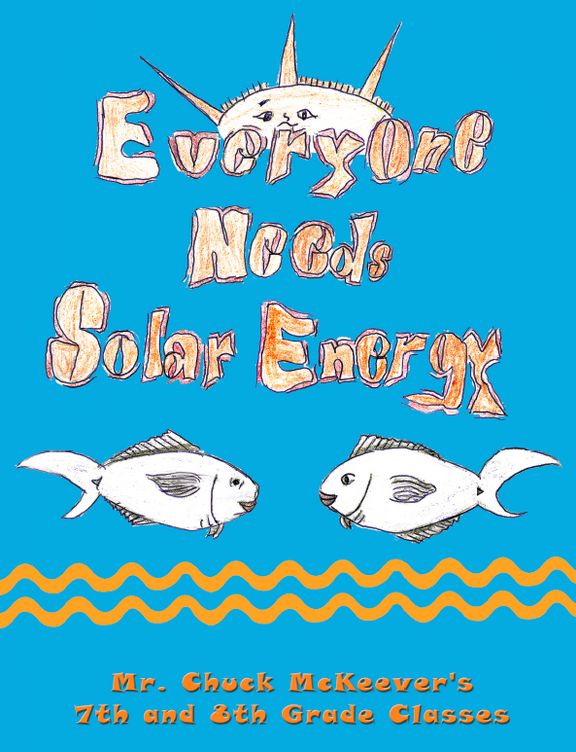
Books written and illustrated by children in the Marshall Islands.
Picture
Picture
Picture
Picture
Picture
Picture
Picture
Picture
Picture
Picture
Picture
Picture
Picture
Picture
Picture
Picture

"Look at That Fat White Baby: Moving to a Developing Country"

Essay in Moving Your Household Without Losing Your Mind about the experience moving to the Marshall Islands and the delights and difficulties of adjusting to a new culture. This book, a collection of essays from Foreign Service officers and their family members, is the first in a series detailing life in the American Foreign Service. It was published May 2013 and was sponsored by the Associates of the American Foreign Service Worldwide (AAFSW).

A large portion of the essay can be read via Amazon's "Look Inside" feature. (Click on the thumbnail image for link.) More about this project is described here.
Picture

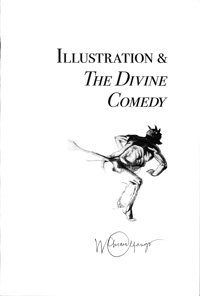
Illustration & The Divine Comedy

Ghostwriter/Translator for Wolfango Peretti Poggi, a celebrated local painter in Bologna, Italy, who illustrated all of Dante's ​Divine Comedy. This booklet was prepared for Peretti's lecture series at Notre Dame University, Chicago, April 1–2, 2009.


Picture

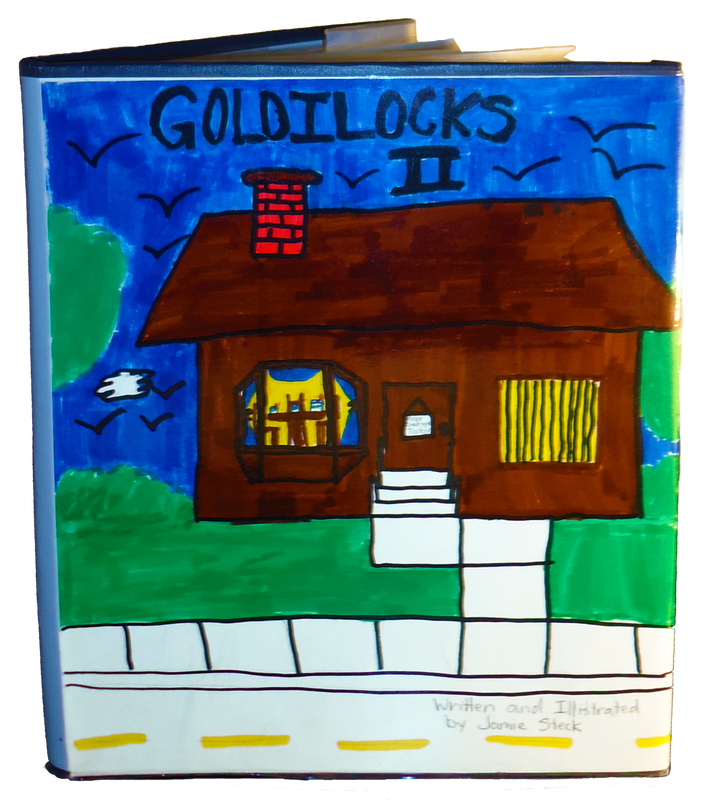
Goldilocks II

Mrs. Caldwell's fifth-grade class, 1995. Goldilocks breaks into a dentistry.
© Jamie Zvirzdin 2026. All Rights Reserved